Friday, November 11, 2011

Holistic Goals

photo from starsandsunshine.com

Everyone has different advice as to where to I should begin with writing my farm business plan. Some suggest a mission statement, others suggest researching markets and finances, and others have just advised me to write down all of my thoughts and to reorganize them into some sort of business plan format.

It's all wonderful advice, but I've still felt stuck all week. I KNOW that I just need to get started, but unfortunately that just seems easier said than done.

So I have taken the advice of my advisors of the Beginning Women Farmers Program and decided to begin with my Holistic Goals. These statements reflect the quality of life that I want to lead (beyond just the business aspect) and therefore become the reference point when I'm making important decisions. They seem simple, but it took several small pockets of time working with K to develop this list, and I'm sure that it's still incomplete.

Here is the initial list:

1. We value time with our family and time with friends.
-       balanced life
-       clear set of priorities

2. We value good food.

3. We value laughter and fun.

4. We value free time.
-       creative thinking + individual projects
-       learning
-       vacation
-       time off the farm and in the community

5. We value healthy minds + bodies + souls.
-       time for sleep
-       time for laughter
-       time to enjoy the farm

6. We value building a healthy future.
-       planning for marriage, children, and retirement
-       sustainable land management (for ourselves and the environment)
-    care for our plants and animals

7. We value financial security and a viable, profitable farm.
-       create profit
-       practice good financial planning and management

8. We value clear communication.
-       cooperative decision making
-       listening + understanding

9. We value community outreach.
-       education
-       community support + interaction

Make a Wish

photo source unknown
It's 11:11AM on 11.11.11.

I figure I can use all the luck I can get in wishing my dreams come true.

Thursday, November 10, 2011

Foraging

photo of foraged mushrooms from awelltraveledwoman.tumblr.com

Have I mentioned how much I love mushrooms?  I just haven't been able to get enough of them this fall.  I love them simply sauteed in butter.

So while I'd like to share that I spent the morning foraging for mushrooms, I was ACTUALLY stuck inside, foraging for paperwork for the FSA loan application.

My first phone call was to Farm Credit East, the other main lending organization in the state for purchasing farmland.  In order to apply for the Beginning Farmers program, I had to be denied a loan through Farm Credit.  The FCE office has been closed for the past two weeks because of the snowstorm, but today I got through.  I expected to have to travel to meet with them, but the woman on the phone was more than understanding and happy to discuss my denial over the phone.  I don't have enough savings, equity, or support to qualify for a traditional loan on my own.  My letter of denial should arrive in the mail next week!  I don't think I have ever been so relieved to be denied!

I also copied my tax paperwork from the past three years and ordered a tax account report from the IRS.  I even requested a copy of my transcript from the university (which is necessary because my degree in agriculture education substitutes valuable farm management experience that I need in order to be eligible).  Typing this list makes it seem very nonchalant, but foraging for this small amount of paperwork required almost 4 hours of phone calls, emails, and searching through boxes of paperwork I never unpacked.

Phewf.  Now I wait for the pieces to arrive in the mail, while I work to write and develop the REST of the application.

Building a Future with Farmers

image from http://www.youngfarmers.org/


The National Young Farmers Coalition recently published THIS report on the current needs of young farmers in the US, based on a survey of over 1,000 farmers (including me!). The report findings include:

~ 78% of farmers ranked “lack of capital” as a top challenge for beginners, with another 40% ranking “access to credit” as the biggest challenge.
~ 68% of farmers ranked land access as the biggest challenge faced by beginners.
~ 70% of farmers under 30 rented land, as compared to 37% of farmers over 30.
~ 74% of farmers ranked apprenticeships as among the most valuable programs for beginners.
~ 55% of farmers ranked local partnerships as one of the most valuable programs, and 49% ranked Community Supported Agriculture (CSA) as a top program.

The report also suggested detailed strategy for improving the number of young farmers and the likelihood for success. The report represents the efforts of a hardworking team of young farmers and will be an invaluable resource as we move into the future.  A great resource!

Wednesday, November 9, 2011

The Right to Farm (and the Regulations that make it Difficult)

photo from betterphoto.com

North Stonington has a Right to Farm Ordinance, to "recognize the importance of protecting prime farmland, to identify those parcels for which preservation is a priority, and to foster farming as a way of life by declaring this municipality’s support of the farmer’s right to farm."

A good thing, right?  Support and encouragement for farmers!

Except that the right to farm is restricted by the town zoning and planning commission.  And while the commission is "urged to adopt regulations consistent with this ordinance," there are a lot of zoning regulations that make the right to farm difficult for many landowners.  The zoning regulations are meant to keep neighbors happy (ie, minimize noise and smell) and the town looking beautiful.  These considerations are extremely important, but how does that translate into enforceable details?

I called the Planning and Zoning Commission this morning, after searching the internet last night and this morning for "understandable" details (which, to me, means regulations that I can read without having to then search 15 million other code numbers before I actually understand what is being said).  The friendly woman on the phone directed me to section 1406: Agriculture Zoning Regulations.

I was pleasantly surprised that I feel unrestricted by the zoning regulations when writing my business plan.  Hooray!

The biggest detail is that the Full Heart Farm property is over 10 acres (11.3, to be exact).  Properties less than 10-acres have very specific animal-density regulations (ie the number of cows, chickens, or sheep I would be allowed to keep on the property would be limited).  However, "no limits shall apply to farms having ten (10) acres or more."  Rejoice!  Even pigs are allowed (something that I'm learning is not allowed in most of the towns around here.

The other details of Agricultural Zoning that would pertain to Full Heart Farm involve agritourism (we hope to have several community-oriented classes and events), waste management, signage, and roadside stands.  In a nutshell, agritourism activities are allowed as long as they are appropriately scaled, provide ample on-site parking, and follow all noise/public health/event town ordinances.  Very doable, as long as we make a friendly first impression and gain the support of our neighbors (or at least the tolerance).

Waste management should not be an issue.  Animals kept on pasture poop on the pasture and their manure is readily absorbed into the soil, rather than being built up in a building year-round.  I will work with Natural Resources and Conservation Services to develop a management plan that protects natural water sources (including the beautiful brook) and properly composts waste from the barn (from brooding chicks or keeping young animals in the winter).

A roadside stand smaller than 50 square feet doesn't require a permit, and stands up to 200 square feet are allowed, provided there is ample parking.  This is great news, as direct-marketing our produce from an on-farm stand could be very profitable.  The farm is off a fairly busy road, and a farmstand offers the luxury of not having to leave the farm to sell our products (once we become established).

A permanent, free-standing sign no larger than 16 square feet per side is allowed (following setback and illumination guidelines).  We are allowed one additional seasonal side (not permanent) for every 300 feet of frontage off of the road, and we could also hang a sign on the barn without regulation.

I'm sure there are important details that I am missing from reading through the zoning and planning regulations that will impact Full Heart Farm, but my initial understanding of the policies leaves me feeling not-limited by the current laws.  I hope that positive relationships with local politicians can help establish good rapport and leave us without the nightmare-ish struggles I've heard other farmers tell.  But I guess we'll just have to wait and see.


Details on North Stonington Agricultural Zoning can be found HERE.

Tuesday, November 8, 2011

Finding Dollar$ Workshop


Errands always make me feel productive.  This morning I bustled around to several different stores for some pre-Christmas shopping.  I'm particularly budget-concious this season and felt overwhelmed at the amount of "crap" available to purchase, but was nonetheless excited to partake in the holiday spirit.


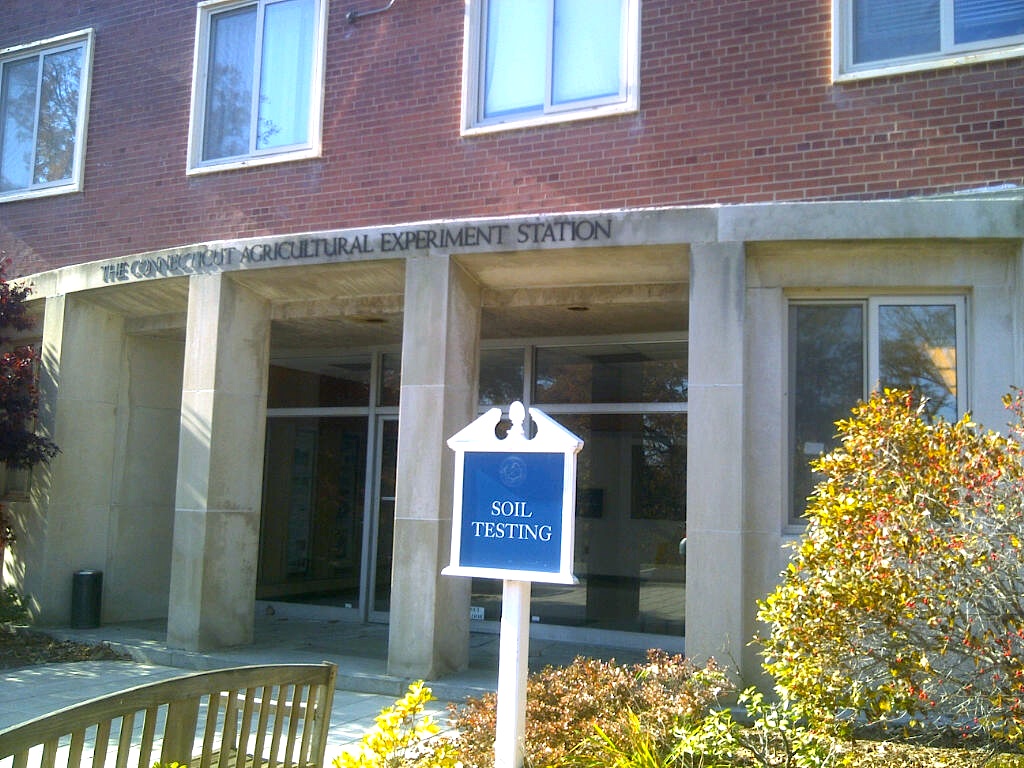
My favorite errands were the ones that were free.  No surprise there.  I dropped off the soil samples from Full Heart Farm (I can't help but smile at how official that sounds) at the CT Agriculture Experiment Station.  The scientists there will analyze any soil samples for CT residents at no charge.  They look at soil nutrient levels, organic matter, and a slew of other factors that can tell you about the quality of your soil.  You can also note a particular crop you are interested in growing (ie. blueberries, sweet corn, pumpkins) and they will make recommendations for soil amendments (ie fertilizer, lime, compost) to help improve your production.  It's a really wonderful service.

After dropping off my soil samples, I headed down the street to the Yale Farm - a small student run farm right in the middle of New Haven (perhaps not geographically, but that's how it feels to me).  Earlier in the spring I had sold the university a half-dozen of my best and brightest pullets (ivy league, teenage-chicks) to raise as egg-layers.  They were a huge hit and quickly became an important part of the farm.  At the end of the summer, when I was looking to move to Mystic and needed to downside my flock, they graciously adopted 5 more of my girls.

Even though they are just chickens, I have been wondering since that night I dropped the chickens off if I had made the right decision.  I needed to make more space at home and make things easier for K, the chicken babysitter, but it was difficult to choose who would leave.  Yesterday any residual guilt was lifted.  Buckeye, Stripes, RoadRunner, Barrington, and Rosie had adjusted beautifully and looked SO happy.  At the Yale Farm they have the constant attention of visitors, lots of tasty dining hall leftovers, and plenty of space to explore the gardens from their movable coop.  The farmers there are so happy to have them and I couldn't be more happy that they have a good home.

In the afternoon (to help offset my morning shopping spree) I attended a workshop offered by UConn Extension and the CT Women in Agriculture Network on Finding Dollar$ in Tough Times.  The workshop outlined the basics of loans, grants, and cost-share programs.  Though there wasn't a lot of new information, it was nice to attend with a specific farm (and therefore specific funding needs) in mind.  Attending the class also gives me the opportunity for one-on-one mentorship on a grant or loan project, which I'll certainly need to take advantage of this winter!

Monday, November 7, 2011

What's in a name?

photo from http://weheartit.com
My self-assigned homework project for the day was to name our future farm.  This is something I've been thinking about for years, but the time has come to pick a name (for the purpose of the loan paperwork and business planning) and stick with it for a while.  A name gives a sense of purpose, an understanding.

I knew that I wanted something simple, not too specific (so that I would feel tied to growing a specific crop), and easy to pronounce and spell (for check writing purposes).  I also wanted something unique (to the extent that it doesn't show up on the first few pages of google as being the name of another farm.

And so K and I spent the past two days bouncing ideas off one another.  Pretty much everything we did, ate, and heard inspired the name of a farm (Nacho Farm was my personal favorite for a while).  We came up with hundreds of (mostly humorous) options.  And then finally one felt right.

Full Heart Farm.

At first I thought it may be a little too...mushy...but I actually think it holds our sentiment quite well.  The name is inspired by one of our favorite TV shows, Friday Night Lights: "Clear eyes, full hearts, can't lose."  We're pursuing this property with full hearts.  We know that starting a farm together, despite the numerous challenges, will be a wonderful way for us to build a family and a community.

Full Hearts.  Full Minds.  Full Bellies.

Life doesn't get more simple than that.